


[風呂敷について]
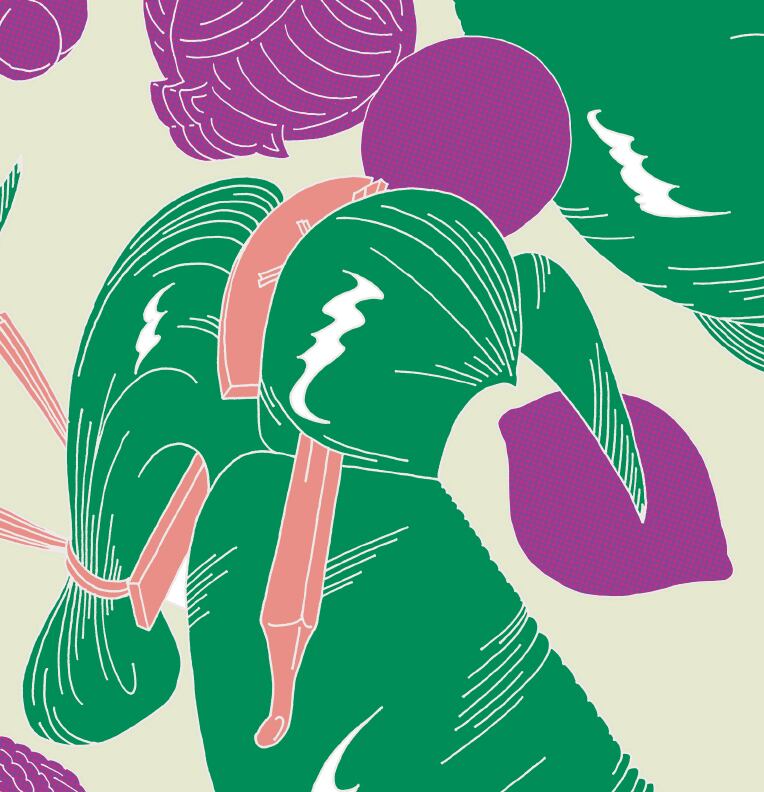
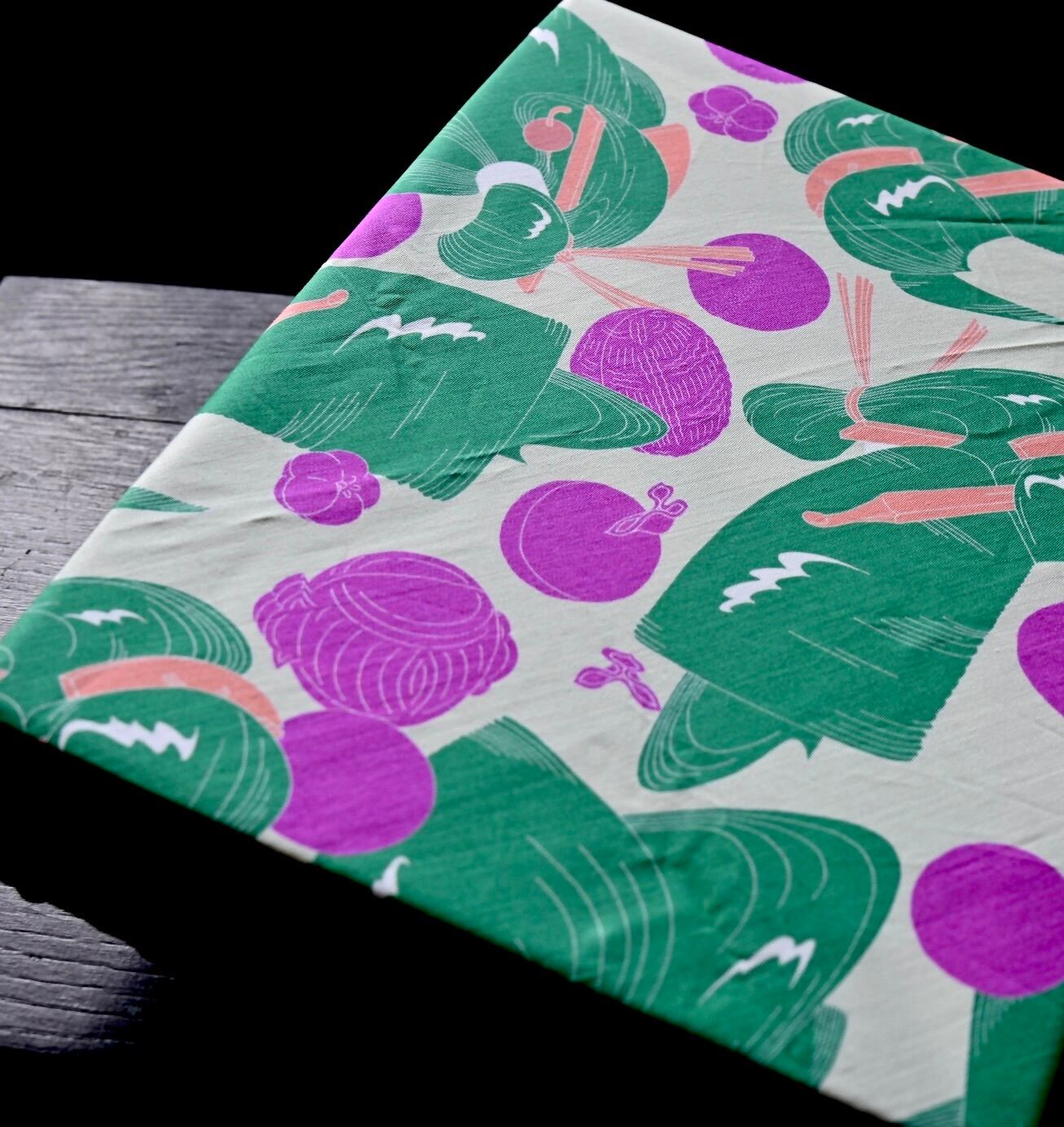
この風呂敷は、金沢の豊かな文化を背景に、芸妓さんのかつらと和菓子を大胆に組み合わせた、伝統とモダンが融合する遊び心あふれる一枚です。落ち着いた緑と紫の組み合わせも洒落ていて、洗練された色使いが魅力です。
兼六園や金沢の郷土料理をモチーフにしたほかの風呂敷とともに、思わずコレクションしたくなるデザイン。使う日の装いや気分に合わせて、選ぶ楽しさも魅力です。
[作家について]
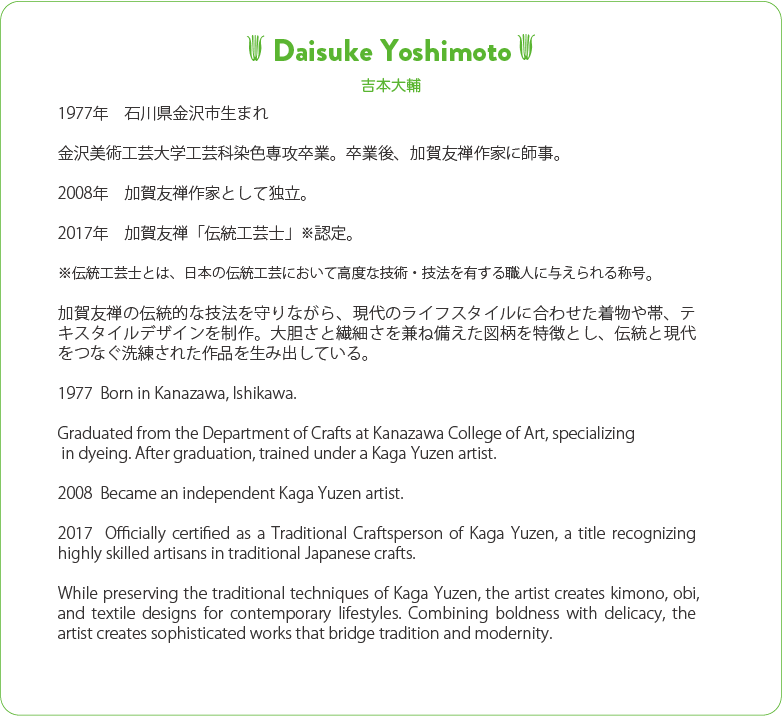
加賀友禅師として、経済産業省認定の伝統工芸士の称号をもつ吉本さん。その作品は遊び心にあふれ、大胆な構図と色使いが特徴です。加賀友禅の伝統的な技法を大切にしながらも、現代的な感覚を取り入れ、伝統と現代をつなぐ心躍る作品を生み出しています。
[風呂敷の楽しみ方]
風呂敷は、一枚あるととても重宝します。
お土産や結婚式の引き出物、プレゼントにはもちろん、小さめのテーブルにクロスとして掛けたり、アクリルの額縁に入れてリビングの壁に絵画のように飾ったりと、さまざまな楽しみ方ができます。
[金沢の三茶屋街と芸妓文化]
金沢には、江戸時代から続く芸妓文化が今も息づく、ひがし茶屋街・にし茶屋街・主計町(かずえまち)茶屋街の三つの茶屋街があります。茶屋街とは、芸妓が舞や唄、三味線などの芸を披露し、お客様をもてなすお茶屋が集まる場所。金沢では、加賀藩の豊かな文化を背景に、独自の芸妓文化が育まれてきました。
① ひがし茶屋街(1820年)
江戸時代後期、加賀藩の公認により浅野川の東側に誕生。格式ある茶屋街として栄え、現在も美しい町並みが残されています。
② にし茶屋街(1820年)
ひがし茶屋街と同じ年に、犀川の西側に誕生。現在も芸妓による舞や三味線など、伝統芸能が受け継がれています。
③ 主計町茶屋街(明治時代)
明治時代に浅野川沿いに形成された茶屋街。細い路地や風情ある町家が並び、昔ながらの情緒を今に伝えています。
※当店の実店舗が入る「八百萬本舗」は、主計町茶屋街のすぐ隣に位置しています。
[芸妓さんのヘアスタイル]
京都の舞妓が経験年数や成長段階に応じて自らの髪の結い方を変える一方、金沢の芸妓は伝統的な島田髷(しまだまげ)を基本とした日本髪のかつらを用います。美しく整えられた髪型には、芸妓としての品格や洗練された大人の女性の美しさが表れているそうです。
[金沢の和菓子文化]
金沢では、江戸時代に加賀藩前田家が茶の湯を奨励したことから、茶道とともに和菓子文化が発展しました。歴代藩主のもとで茶の湯が盛んになり、城下町には多くの菓子職人が集まりました。四季折々の自然を繊細に表現した和菓子は、茶席だけでなく、祝い事や年中行事にも欠かせないものとなりました。こうして育まれた和菓子文化は、現在も金沢の暮らしの中に深く根付いています。
辻占や氷室饅頭、福徳せんべい、五色生菓子など、四季折々の行事や暮らしに根付いた伝統菓子が今も数多く受け継がれています。どれも愛らしく、金沢の豊かな文化と人々の願いが込められたものばかりです。
①辻占(つじうら)
小さなおみくじを包んだ縁起菓子。金沢ではお正月に楽しむ風習があります。
② 氷室饅頭(ひむろまんじゅう)
毎年7月1日の「氷室の日」に、無病息災を願って食べる紅白緑の饅頭。
③ 福徳せんべい(ふくとくせんべい)
縁起物の小さな玩具などが入った、金沢の正月を彩る伝統菓子。
④ 五色生菓子(ごしきなまがし)
日・月・山・海・里を表す五種類の生菓子。加賀藩ゆかりの婚礼菓子として受け継がれています。
【サイズ】約 74 cm × 77 cm
【素材】綿
【技法】インクジェットプリント
【お手入れ方法】
手洗い・アイロン OK
色移りを防ぐためには、たっぷりの水で洗い、洗濯後すぐに十分な脱水を行って下さい。
[About This Furoshiki]
Inspired by Kanazawa's rich cultural heritage, this furoshiki brings together traditional geisha hairstyles and Japanese sweets in a bold and playful design that blends tradition with modernity. The sophisticated combination of muted green and purple adds a refined, contemporary touch.
Together with other furoshiki designs featuring Kenrokuen Garden and Kanazawa's traditional local cuisine, these charming pieces are almost irresistible to collect. Enjoy choosing a different design to complement your outfit or simply to suit your mood.
[About the Artist]
Yoshimoto is a Kaga Yuzen artist officially certified as a Traditional Craftsperson by Japan's Ministry of Economy, Trade and Industry.
The artist's work is characterised by playful creativity, bold compositions, and a distinctive sense of colour. While preserving the traditional techniques of Kaga Yuzen, Yoshimoto brings a fresh, contemporary perspective to this centuries-old craft, creating delightful pieces that bridge tradition and modernity.
[Ways to Enjoy Your Furoshiki]
A furoshiki is a wonderfully versatile piece of cloth, both beautiful and practical.
It makes a thoughtful souvenir, wedding favour, or gift. Beyond its traditional use for wrapping, it can also be draped over a small table as a tablecloth or displayed in an acrylic frame, like a piece of artwork on your living room wall.
[Kanazawa's Three Historic Geisha Districts and Geisha Culture]
Kanazawa is home to three historic geisha districts where traditions dating back to the Edo period are still very much alive: Higashi Chaya, Nishi Chaya, and Kazuemachi Chaya.
A chaya is a traditional teahouse where geisha entertain guests through dance, singing, shamisen music, and other performing arts. Supported by the rich cultural heritage of the Kaga Domain, Kanazawa developed its own distinctive geisha traditions.
① Higashi Chaya District (1820)
Established in 1820 during the late Edo period with the approval of the Kaga Domain, Higashi Chaya developed on the eastern side of the Asano River. Known for its elegance and prestige, the district still retains its beautiful historic teahouse architecture and traditional streetscape.
② Nishi Chaya District (1820)
Established in the same year as Higashi Chaya, Nishi Chaya developed on the western side of the Sai River. Traditional performing arts, including geisha dance and shamisen music, continue to be passed down through generations.
③ Kazuemachi Chaya District (Meiji Period)
Kazuemachi developed along the Asano River during the Meiji period. Its narrow lanes and charming traditional wooden townhouses preserve the atmosphere of old Kanazawa.
*Our physical shop, located inside Yaoyorozu Honpo, is situated right next to the Kazuemachi Chaya District.*
[Traditional Geisha Hairstyles]
While Kyoto's maiko (apprentice geisha) traditionally style their own hair in different ways to reflect their experience and stage of training, Kanazawa's geisha generally wear traditional Japanese wigs styled in the Shimada-mage, a classic Japanese hairstyle. These beautifully arranged hairstyles are said to embody the elegance, refinement, and dignity of a mature geisha.
[Kanazawa's Traditional Confectionery Culture]
During the Edo period, the Maeda family, rulers of the Kaga Domain, actively encouraged the Japanese tea ceremony, leading to the development of Kanazawa's rich confectionery culture. As tea culture flourished under successive feudal lords, many skilled confectioners gathered in the castle town. Wagashi, traditional Japanese sweets delicately crafted to reflect the beauty of the changing seasons, became an essential part of tea ceremonies, celebrations, and annual traditions.
This rich confectionery culture remains deeply rooted in everyday life in Kanazawa.
Traditional sweets such as Tsujiura, Himuro Manju, Fukutoku Senbei, and Goshiki Namagashi continue to be enjoyed today, each closely connected to seasonal celebrations and local customs. Charming in their own unique ways, these sweets reflect Kanazawa's rich cultural heritage and the wishes and sentiments of its people.
① Tsujiura (Fortune-Telling Sweets)
Delicate sweets containing small paper fortunes, traditionally enjoyed during New Year celebrations in Kanazawa.
② Himuro Manju (Himuro Sweet Buns)
Steamed sweet buns in pink, white, and green, traditionally eaten on 1 July, known as Himuro no Hi, to wish for good health and protection from illness.
③ Fukutoku Senbei (Lucky Fortune Crackers)
Traditional New Year sweets containing small lucky charms or miniature toys, bringing an element of surprise and good fortune to the celebrations.
④ Goshiki Namagashi (Five-Coloured Japanese Sweets)
A set of five traditional sweets representing the sun, moon, mountains, sea, and countryside. These sweets have long been associated with wedding celebrations and the cultural traditions of the Kaga Domain.
[Size]Approx. 74 cm × 77 cm
[Material]Cotton
[Technique]Inkjet printing
[Care Instructions]
Hand washing and ironing are permitted.
To prevent colour transfer, wash in plenty of water and spin thoroughly immediately after washing.

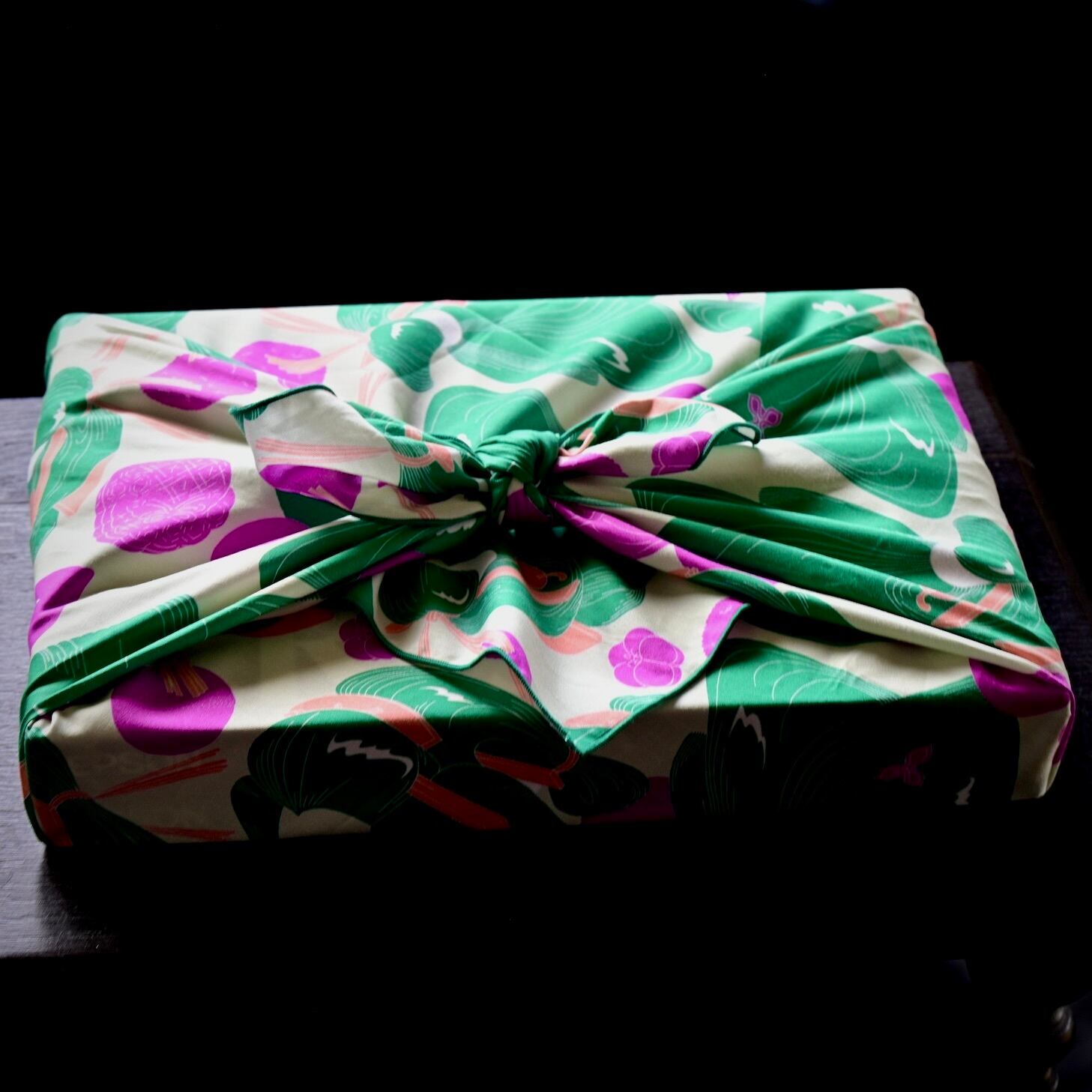



吉本大輔 作 風呂敷 芸妓と和菓子 Geisha and Wagashi (Traditional Japanese Sweets)[2104500000121]
¥4,950 ($31.51)税込
RELATED ITEMS:関連のある商品

村田菜穂美 『アネモネパスタ皿 23cm』[2104130000331]
¥6,600 ($42.02)

村田菜穂美作 子供用ゆのみ 「うさちゃんとさくらんぼ」[2104130000119]
¥2,530 ($16.11)
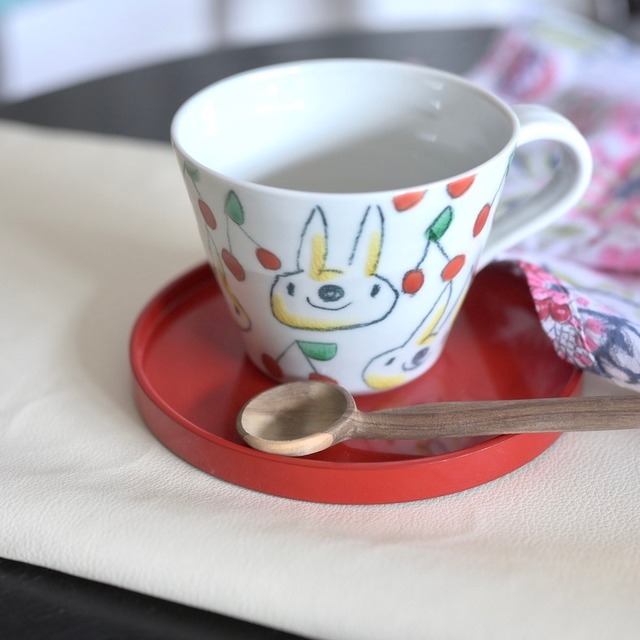
村田菜穂美作 オーレマグカップ 「うさちゃんとさくらんぼ」 [2104130000232]
¥4,730 ($30.11)

 LINE